
Korean Grocery Stores in the Philippines: Where to Buy Korean Food & Ingredients
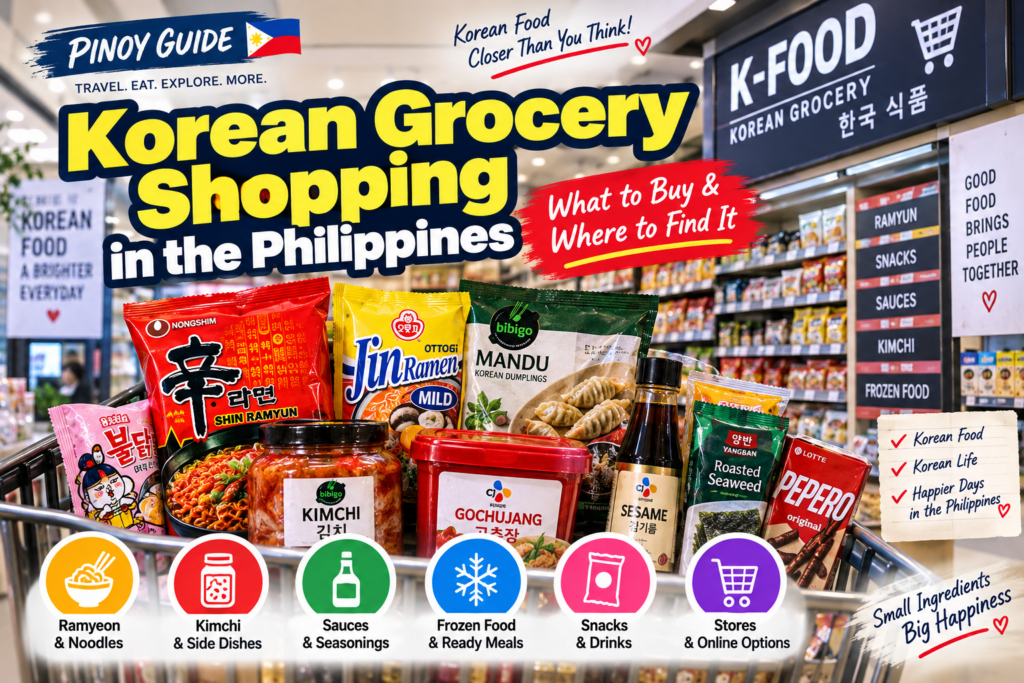
Craving Korean food pero ayaw mong laging kumain sa restaurant?
Good news: Korean groceries are now much easier to find in the Philippines.
From ramyeon and kimchi to gochujang, seaweed, frozen dumplings and Korean snacks, many ingredients used in Korean cooking can now be bought locally.
But if you’re new to Korean grocery shopping, maaaring nakakalito kung ano ang bibilhin at kung saan hahanapin ang ingredients.
Here’s a practical PINOY GUIDE to help you get started.
What Can You Buy at a Korean Grocery Store?
A typical Korean grocery store in the Philippines may carry much more than instant noodles.
Depending on the size of the store, you may find:
- Korean ramyeon and instant noodles
- kimchi and other side dishes
- gochujang and doenjang
- soy sauce, sesame oil and cooking sauces
- Korean rice and seaweed
- frozen mandu and rice cakes
- fish cakes and processed meat
- Korean snacks and chocolates
- coffee and non-alcoholic drinks
- frozen or chilled Korean food
Larger supermarkets may also have vegetables, meat cuts and ingredients specifically intended for Korean dishes.
Product availability varies by branch, so don’t expect every Korean store to carry exactly the same items.

1. Ramyeon — The Easiest Place to Start
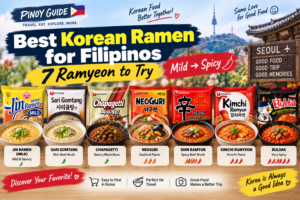
For many Filipinos, Korean ramyeon is the first Korean grocery product they try. If you need help choosing by flavor and spice level, see our Korean ramen guide for Filipinos.
Popular choices include Shin Ramyun, Jin Ramen, Neoguri, Chapagetti and Buldak varieties.
If you’re not used to spicy Korean food, don’t automatically choose the package that looks most exciting.
Start with a milder variety and work your way up.
You can also upgrade ordinary ramyeon with:
egg + green onion + cheese + dumplings
It’s an inexpensive way to create a more filling Korean-style meal at home.

2. Kimchi — Check the Refrigerator
Authentic kimchi is normally found in the refrigerated section, rather than beside dry noodles and snacks.
The most familiar variety is baechu kimchi, made primarily with napa cabbage.
Kimchi can be eaten as a side dish, but that’s not its only use.
Try it with:
- fried rice
- ramyeon
- grilled meat
- kimchi jjigae
- eggs
- rice bowls
Before buying, check the storage instructions and date information on the package.
Once opened, keep it refrigerated according to the manufacturer’s instructions.

3. Gochujang — A Useful Korean Pantry Ingredient
If you want to cook Korean dishes rather than simply buy Korean snacks, gochujang is one ingredient worth knowing.
Gochujang is Korean fermented red pepper paste.
It can be used in dishes and sauces such as bibimbap, tteokbokki and spicy marinades.
But don’t confuse it with gochugaru.
Gochujang = fermented red pepper paste
Gochugaru = Korean red pepper flakes/powder
They are related to Korean spicy cooking, but they’re not interchangeable in every recipe.
4. Doenjang — For Korean Soups and Stews
Another traditional ingredient is doenjang, a fermented soybean paste.
It’s commonly associated with Korean soups and stews such as doenjang jjigae.
Compared with the sweet-spicy flavor many people associate with gochujang, doenjang has a deeper, salty and fermented flavor.
For beginners, you don’t need to buy every Korean sauce at once.
Start with the ingredients required by the dish you actually plan to cook.

5. Tteokbokki and Frozen Korean Food
Want something quick?
Check the refrigerated and frozen sections.
Depending on the store, you may find:
tteok (rice cakes), mandu, fish cakes, hotdogs, frozen meals and ready-to-cook tteokbokki kits.
These products can be particularly convenient for beginners because some require much less preparation than cooking a Korean dish completely from scratch.
Always follow the storage and cooking instructions printed on the package.
6. Korean Snacks
Not everything requires cooking.
Korean grocery stores are also fun places to explore snacks.
You’ll commonly encounter products such as chips, crackers, seaweed snacks, chocolate snacks, biscuits, coffee and flavored drinks.
If you’re trying an unfamiliar product for the first time, consider buying one small package before buying in bulk.
A viral Korean snack isn’t automatically going to match everyone’s taste.

Where to Buy Korean Groceries in the Philippines
There isn’t just one option.
Korean groceries can now be found through several types of retailers.
For verified specialty-store examples, check the official websites of Shin K-Mart and Aja Mart Korean Grocery. Branches, operating hours, delivery coverage, and available products may change, so confirm the latest details directly with the retailer before visiting or ordering.
Korean Specialty Grocery Stores
Dedicated Korean supermarkets usually offer the widest selection.
They’re especially useful when you’re looking for less common sauces, refrigerated products or ingredients for a specific Korean recipe.
Major Supermarkets
Some large supermarkets in the Philippines have dedicated imported or international-food sections where Korean noodles, sauces, snacks and seaweed may be available.
The selection is generally smaller than at a Korean specialty store, but it’s convenient for basic items.
Online Shopping
Korean groceries are also widely sold online.
This can be convenient, especially if you don’t live near a Korean supermarket.
However, pay extra attention when buying refrigerated or frozen food.
Check the seller, product description, expiration/date information when available, and whether appropriate delivery or temperature handling is provided.
Korean Grocery Shopping: Check These Before Buying
Imported products can cost noticeably more than local alternatives, so it’s worth checking a few things before putting them in your cart.
1. Price per unit
A bigger package isn’t always the better deal.
2. Expiration or best-before information
Especially important when buying discounted products.
3. Storage requirements
Some Korean products must remain refrigerated or frozen.
4. Spice level
Don’t assume every red package has the same heat level.
5. Product size
Online photos can make a package look much larger than it really is.
6. Label and importer information
For commercially sold prepackaged food, check the product labeling and relevant information on the package.
How Much Should You Buy on Your First Visit?
One common mistake is buying too many unfamiliar products because everything looks interesting.
For a first Korean grocery trip, a simple basket might be:
2–3 ramyeon varieties
1 small kimchi
1 Korean sauce or paste
1 frozen product
1–2 snacks
Try them first.
Then you’ll know what is worth buying again.
Korean Grocery Shopping for Filipino Families
You don’t need to replace your normal Filipino pantry with Korean ingredients.
A better approach is to mix the two.
Rice, eggs, vegetables, chicken and pork already used in many Filipino households can also work with various Korean-style meals.
Add a few Korean ingredients when you want a different flavor.
For example:
Rice + egg + kimchi → quick meal
Pork + Korean marinade → Korean-style dinner
Ramyeon + egg + vegetables → easy merienda or meal
Rice + seaweed + tuna → simple Korean-inspired rice bowl
This makes Korean grocery shopping more practical instead of turning it into an expensive novelty.
Korean Grocery Store vs Regular Supermarket
| Korean Grocery Store | Regular Supermarket |
|---|---|
| Wider Korean selection | Easier to access |
| More specialty ingredients | Good for popular products |
| Better chance of finding chilled/frozen Korean foods | Korean selection may be limited |
| Useful for specific recipes | Convenient for basic shopping |
Neither is automatically better.
If you only need ramyeon and seaweed, your regular supermarket may be enough.
If you’re cooking tteokbokki, doenjang jjigae or another specific Korean recipe, a Korean specialty grocery store is usually more useful.
FAQ
Where can I buy Korean food in the Philippines?
Korean food and ingredients are available at Korean specialty supermarkets, selected major supermarkets and online stores. Availability varies significantly by city, retailer and branch.
What Korean groceries should beginners buy?
Ramyeon, kimchi, seaweed and one versatile Korean sauce or paste are easy starting points. Buy small quantities until you know what you like.
Is all Korean food spicy?
No. Korean cuisine includes plenty of mild foods. Products such as some beef-broth noodles, seaweed, dumplings and many snacks may have little or no heat. Always check the specific product.
What’s the difference between gochujang and gochugaru?
Gochujang is a fermented red pepper paste, while gochugaru refers to Korean red pepper flakes or powder. They serve different purposes in recipes.
Is it cheaper to buy Korean groceries online?
Not necessarily. Compare the final price, package size and delivery fee. For frozen and refrigerated products, proper handling can matter more than a small price difference.
Final Recommendation
You don’t need a huge shopping cart to start enjoying Korean food at home.
For beginners, start with ramyeon, kimchi, seaweed and one cooking ingredient, then gradually explore Korean sauces, frozen foods and snacks.
And remember:
Don’t buy something just because it’s popular in Korea or trending on social media.
Choose products based on your taste, how often you’ll use them and whether they fit the meals your family actually eats.
That’s the easiest way to make Korean grocery shopping in the Philippines both enjoyable and practical. Travelers who want to compare these products with what is sold in Korea can also read our Korean convenience store food guide.
Information checked: September 8, 2026.
Product availability, prices, ingredients, labeling and store policies may change. Check the actual product label and retailer information before purchasing, particularly for products with allergies or special storage requirements.
Official Sources
Korea Agro-Fisheries & Food Trade Corporation (aT) — Korean agricultural and food export information
https://www.at.or.kr/
Korea Tourism Organization – VISITKOREA — Official guide to kimchi
https://english.visitkorea.or.kr/svc/contents/contentsView.do?vcontsId=140728
Korea Tourism Organization – VISITKOREA — Official guide to gochujang and doenjang
https://english.visitkorea.or.kr/svc/contents/contentsView.do?vcontsId=221365
Philippine Food and Drug Administration (FDA) — Philippine food-product and regulatory information
https://www.fda.gov.ph/
PINOY GUIDE


Comments 0
Be the first to comment..