
Korea Autumn Guide: Kailan Makikita ang Fall Foliage?
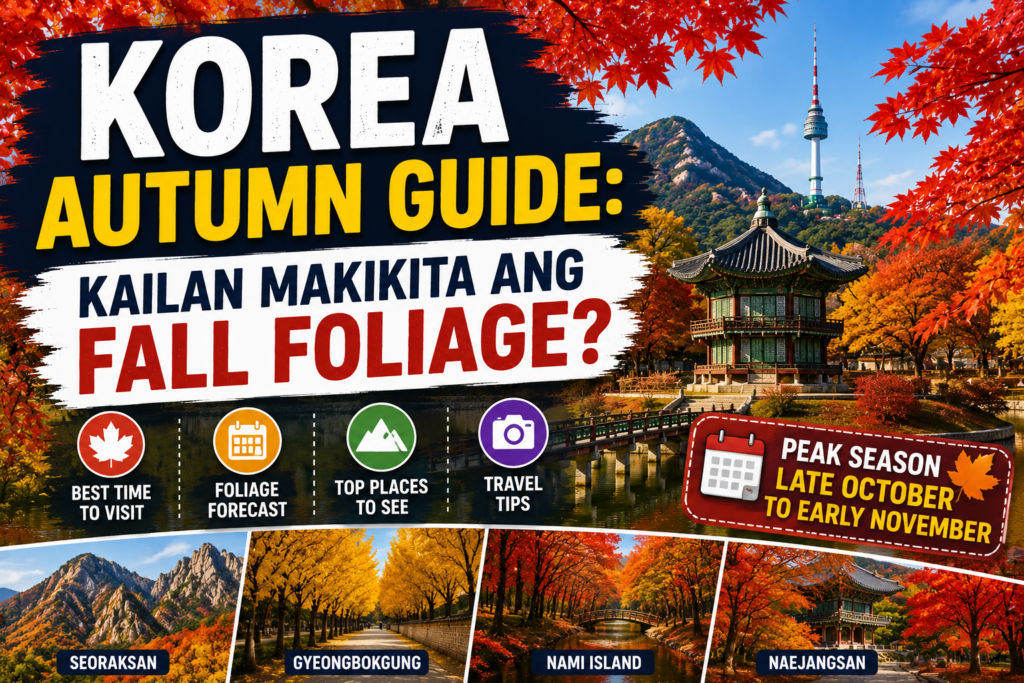
Planning to visit Korea during autumn?
Kung Filipino traveler ka, there is one question you should answer before booking your trip:
“Kailan ba pinakamagandang makita ang fall foliage sa Korea?”
Korea is beautiful throughout the year, but autumn is something special.
The mountains turn red and orange, ginkgo trees become bright yellow, and famous palaces in Seoul look completely different surrounded by autumn colors.
But timing is very important.
If you arrive too early, most trees may still be green. If you arrive too late, many of the leaves may already have fallen.
So if fall foliage is one of the main reasons you are traveling to Korea, this guide will help you understand when and where to see Korea’s autumn colors.

When Is Autumn in Korea?
Autumn in Korea generally covers September, October and November.
However, this does not mean you will see colorful leaves throughout the entire three months.
September can still be relatively warm, especially during the first half of the month.
The autumn colors usually become much more noticeable during October and continue into November, depending on the region and weather conditions.
For travelers whose main goal is fall foliage, late October to early November is generally one of the most useful periods to consider.
Korea Tourism Organization’s 2025 foliage forecast, for example, expected peak foliage across many parts of Korea from late October through early November. Exact timing, however, changes every year.
Why Does Fall Foliage Start at Different Times?
Korea does not change color all at once.
Generally, autumn foliage begins earlier in colder northern and mountainous regions and gradually progresses toward central and southern areas.
This means you may find colorful foliage in Seoraksan while some trees farther south are still relatively green.
Altitude also matters.
Mountain areas can change earlier than cities.
Think of Korea’s autumn colors as gradually moving across the country rather than appearing everywhere on one particular day.
Korea Fall Foliage: Approximate Timing
For travel planning, this simple guideline can help.
Late September – Early October
Early autumn colors may begin appearing in colder mountain regions.
Mid-October
More mountain destinations start developing noticeable autumn colors.
Late October
Often an excellent period for autumn scenery in many parts of Korea.
Late October – Early November
Usually a very important period for Seoul and many central regions.
Early – Mid-November
Southern destinations may still offer beautiful foliage after some northern areas have already passed their peak.
These are general travel-planning guidelines rather than guaranteed dates.
Always check the official foliage forecast closer to your departure.

Seoraksan: One of the Earliest Famous Fall Destinations
If you are visiting Korea relatively early in autumn, Seoraksan National Park is one of the destinations worth checking.
Located in Gangwon State, Seoraksan is one of Korea’s best-known mountain destinations for autumn foliage.
Because of its northern location and mountainous terrain, autumn colors generally appear relatively early here.
The combination of rocky mountains, valleys and colorful trees creates some of Korea’s most dramatic autumn landscapes.
For Filipino travelers staying in Seoul, Sokcho and Seoraksan can also be incorporated into a separate day trip or overnight itinerary.
When Can You See Fall Foliage in Seoul?
If this is your first trip to Korea, you will probably spend much of your vacation in Seoul.
The good news is:
You don’t have to leave Seoul to enjoy autumn.
Late October through early November is generally a useful window to watch, although the exact peak varies each year.
In the Korea Tourism Organization’s 2025 forecast, for example, Bukhansan’s first foliage was forecast for October 17 and peak foliage around November 4.
That does not mean the same dates will apply every year.
Use them only as a reference for understanding the general seasonal pattern.
Best Places to See Autumn Leaves in Seoul
There are many good autumn spots around Seoul.
Gyeongbokgung Palace
One of the best choices for first-time visitors.
Traditional Korean architecture surrounded by red and yellow leaves creates a classic Korean autumn scene.
Renting a hanbok can make the experience even more memorable.
Deoksugung Stone Wall Road
A beautiful place for an easy autumn walk.
The golden ginkgo trees around the palace area are particularly attractive during the season.
Seoul Forest
A great option if you prefer parks rather than historical attractions.
You can combine Seoul Forest with cafés and restaurants around Seongsu-dong.
Olympic Park
A spacious park with walking areas and seasonal scenery.
Bukhansan National Park
If you want something more adventurous, Bukhansan offers mountain foliage without traveling far from Seoul.
Korea Tourism Organization recommends locations including Gyeongbokgung Palace, Seoul Forest, Olympic Park and Seokchon Lake for Seoul autumn scenery.
Nami Island: Easy Autumn Trip from Seoul
Nami Island is another popular choice among international travelers.
Tree-lined roads make it especially photogenic during autumn.
The island is also familiar to many Filipino visitors because of its connection with Korean dramas and Korean pop culture.
Nami Island can be combined with nearby attractions, making it suitable for a full-day trip outside Seoul.
Korea Tourism Organization also includes Nami Island among its recommended autumn foliage destinations.
Naejangsan: One of Korea’s Famous Autumn Destinations
If your priority is serious fall foliage, consider traveling farther south to Naejangsan National Park.
Naejangsan is particularly famous for its maple trees and colorful autumn trails.
One of its signature scenes is the area around Naejangsa Temple, where colorful leaves create a beautiful tunnel-like landscape.
Korea Tourism Organization describes Naejangsan as one of Korea’s representative destinations for viewing autumn foliage.
Because it is farther south, its peak can also occur later than some northern mountain areas.
In the 2025 forecast, Naejangsan’s peak foliage was predicted around November 11, illustrating how much regional timing can differ.
Gyeongju: Autumn + Korean History
If you enjoy history and culture, Gyeongju is another excellent choice.
Gyeongju was the capital of the ancient Silla Kingdom and contains many important historical sites.
During autumn, places such as Bulguksa Temple become even more beautiful as historic architecture is surrounded by seasonal colors.
This makes Gyeongju a good destination for travelers who want both cultural sightseeing and autumn scenery.
What Should Filipinos Wear During Korean Autumn?
This depends heavily on when you visit.
Early autumn can still feel relatively warm during the daytime.
By late October and November, mornings and evenings can become noticeably colder.
For Filipino travelers accustomed to tropical weather, even temperatures that Koreans consider “cool” may feel cold.
A practical autumn outfit might include:
- Long pants
- Long-sleeved shirt
- Light sweater
- Jacket
- Comfortable walking shoes
- Light scarf for colder days
The most important strategy is layering.
You can remove a layer when it gets warmer during the afternoon and put it back on when temperatures drop in the evening.
Autumn Travel Tip: Expect Crowds
There is one downside to Korea’s beautiful autumn season.
Popular foliage destinations can become very crowded.
Seoraksan, Naejangsan, Nami Island and other famous destinations attract many visitors during peak foliage periods.
Weekends can be particularly busy.
If possible, visit major autumn attractions on weekdays and arrive early in the morning.
This can make a significant difference in your experience.
Korea Tourism Organization also notes that well-known foliage destinations can become crowded during the popular October-to-early-November period.
Should You Book Hotels Early?
If your trip coincides with popular autumn weekends, booking accommodation early is a good idea.
This is particularly important when staying near famous seasonal destinations.
Transportation should also be considered.
KTX trains, intercity buses and popular tours can become busier during weekends and peak travel periods.
If you already know your itinerary, don’t leave every reservation until the last minute.

Best Strategy for Filipino Travelers
If this is your first Korea autumn trip, you don’t necessarily need to chase the perfect peak foliage date.
A better strategy is to choose a period when you have several options.
For example, staying in Korea from late October into early November may give you access to different autumn conditions depending on location.
If Seoul is slightly early, you may visit a mountain destination.
If northern mountains have already passed peak foliage, another destination farther south may still be approaching its best colors.
The key is flexibility.
Don’t Trust Old Foliage Forecasts
This is very important.
Do not book your trip based only on a foliage calendar you saw on an old blog or social media post.
Autumn timing changes depending on temperature and weather conditions.
Korea has experienced significant year-to-year climate variation; for example, the Korea Meteorological Administration reported unusually high temperatures and frequent rain during September and October 2025.
That is why your final check should be made close to your actual travel dates.
How to Check Korea’s Latest Fall Foliage Forecast
Before traveling, check updated information from reliable Korean sources.
One useful resource is VISITKOREA, the official tourism platform operated by the Korea Tourism Organization.
During autumn, seasonal foliage information and recommended destinations are often published there.
For weather conditions, you can also check the Korea Meteorological Administration.
Korea Meteorological Administration
Check again approximately one or two weeks before your trip rather than relying only on predictions made months earlier.
Is Autumn a Good Time for Filipinos to Visit Korea?
For many Filipino travelers, yes—autumn is one of the easiest seasons to enjoy Korea.
Unlike winter, you usually don’t need extremely heavy clothing.
Unlike summer, sightseeing can be more comfortable once the heat has eased.
And unlike spring, autumn offers a completely different landscape dominated by red maple leaves, golden ginkgo trees and colorful mountains.
If you enjoy walking, photography, Korean history, cafés and outdoor attractions, autumn can be an excellent choice.
Final Thoughts: Kailan Pinakamagandang Pumunta?
If fall foliage is your main goal, remember this simple rule:
October to early November is the key period to watch, with late October to early November often especially useful for many popular destinations.
But there is no single perfect date for the entire country.
Seoraksan may change color earlier.
Seoul follows later.
Southern destinations such as Naejangsan can peak even later.
So instead of asking only:
“Anong date ang peak foliage?”
Ask:
“Saan ang peak foliage during my travel dates?”
That small change in strategy can make planning your Korea autumn trip much easier.
And if you get the timing right, Korea’s autumn scenery may become one of the highlights of your entire trip.
FAQ
What month is best for autumn leaves in Korea?
October and early November are generally the most important periods for fall foliage travel, although timing varies by region and year.
Is October 15 too early for Seoul autumn foliage?
It can be early for peak foliage in some parts of Seoul. Some mountain destinations farther north or at higher elevations may show stronger colors earlier.
Is November too late for Korea fall foliage?
Not necessarily. Early November can still offer excellent foliage in Seoul and other regions, while some southern destinations may peak later.
Where should first-time Filipino travelers see autumn leaves?
For an easy first trip, consider Gyeongbokgung Palace, Seoul Forest, Bukhansan and Nami Island. Travelers willing to go farther can consider Seoraksan, Naejangsan and Gyeongju.
Is Korea cold during autumn?
It depends on the month. September can be relatively warm, while late October and November can feel cold, especially during mornings and evenings.
Sources
- Korea Tourism Organization (VISITKOREA) – Fall Foliage Forecast and Autumn Travel Information
- Korea Meteorological Administration – Korean Weather and Climate Information
- VISITKOREA – Seoraksan and Naejangsan Autumn Travel Information
Recommended Tags: Korea Autumn, Korea Fall Foliage, Korea Travel for Filipinos, Autumn in Korea, Seoul Autumn, Korea October Travel, Korea November Travel, Nami Island Autumn, Seoraksan Autumn, Naejangsan, Korea Travel Guide, Filipino Travelers
PINOY GUIDE





Comments 0
Be the first to comment..