
Fuel Price Hike Explained: Paano Naaapektuhan ang Pamasahe at Grocery Prices?
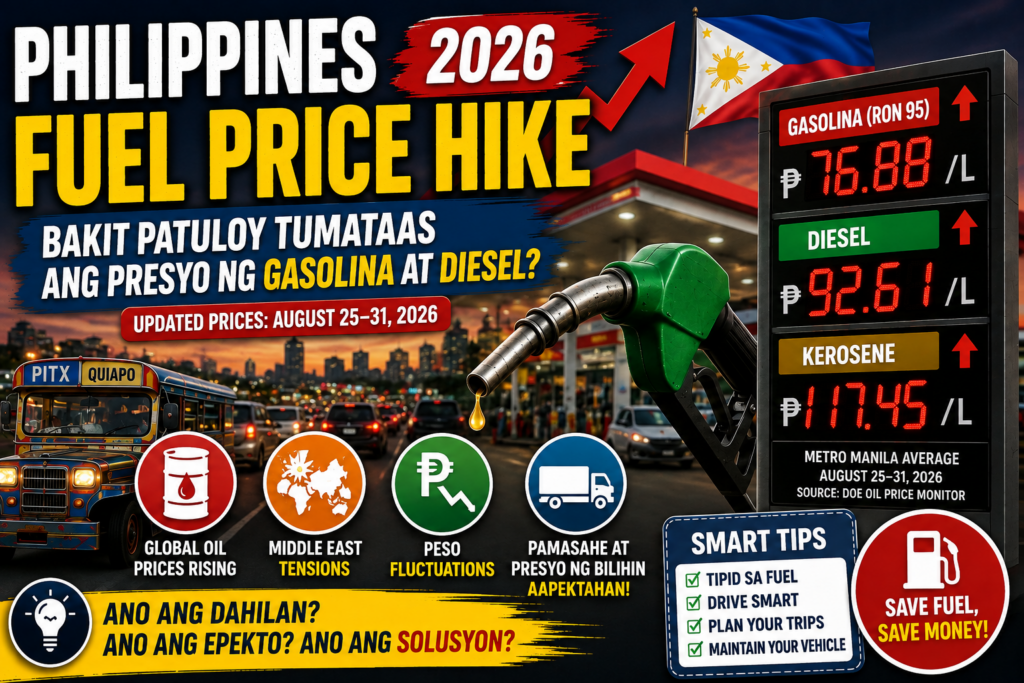
Kapag tumataas ang presyo ng gasolina at diesel, kadalasan ang unang naiisip natin ay:
“Mas mahal na naman magpa-gas.”
Pero hindi lang motorists ang apektado ng fuel price hike.
Kahit wala kang sariling sasakyan, maaari mo pa rin itong maramdaman sa pamasahe, delivery fees, grocery prices at overall household budget.
Bakit?
Dahil halos lahat ng produkto na binibili natin ay kailangang i-transport bago makarating sa supermarket, palengke o tindahan.
Ganito ang simpleng epekto:
Fuel Price ↑ → Transportation Cost ↑ → Business Cost ↑ → Consumer Prices ↑
Tingnan natin kung paano ito nangyayari.
Bakit Malaking Issue ang Diesel Price?
Sa Pilipinas, napakahalaga ng diesel sa transportation at distribution system.
Ginagamit ito ng maraming:
- jeepneys at buses
- delivery vans
- cargo trucks
- agricultural vehicles
- logistics companies
- commercial vehicles
Kaya kapag tumaas ang diesel ng ilang piso kada litro, maaaring maliit itong tingnan sa isang liter lamang.
Pero ibang usapan kapag daan-daang litro ang ginagamit ng isang truck o transport operator bawat linggo.
Dito nagsisimulang lumaki ang epekto.
Fuel Price Hike → Mas Mataas na Pamasahe?
Isa sa pinakamabilis makaramdam ng oil price hike ay ang public transportation sector.
Kapag tumataas ang diesel, tumataas din ang operating cost ng jeepney, bus at iba pang PUV operators.
Hindi lamang fuel ang gastos nila. May maintenance, tires, spare parts at iba pang expenses din.
Kaya kapag matagal na mataas ang fuel prices, maaaring humiling ang transport groups ng fare adjustment.
Noong July 30, 2026, nagsimulang pag-aralan ng LTFRB ang fare-increase petitions mula sa limang major transport groups dahil sa tumataas na operating costs na konektado sa global fuel price shock.
Ibig sabihin, may malinaw na connection:
Mas mahal na diesel → mas mataas na operating cost → pressure para sa fare increase.
Pero hindi automatic na kapag tumaas ang diesel ngayon ay tataas agad bukas ang pamasahe.
Regulated ang public transport fares at dumadaan sa government review ang fare adjustments.
Saan Titingin ng Official Fuel Price Updates?
Regular na naglalabas ang Department of Energy ng Oil Monitor at retail-pump-price reports. Dahil nagbabago ang presyo kada linggo, mas ligtas na tingnan ang DOE Oil Monitor kaysa umasa sa lumang price-hike figures.
Paano Naman Naaapektuhan ang Grocery Prices?
Ito ang epekto na minsan ay hindi agad napapansin.
Isipin natin ang simpleng kamatis na binibili mo sa supermarket.
Bago makarating iyon sa shelf, maaaring dumaan ito sa:
Farm → Truck → Trading Center → Warehouse → Delivery Truck → Supermarket
Bawat stage ay may transportation cost.
Kapag mas mahal ang diesel, maaaring tumaas ang gastos sa pagdadala ng produkto.
Hindi lang gulay ang apektado.
Ganito rin ang maaaring mangyari sa:
rice, meat, fish, beverages, canned goods, frozen products at imported products.
Kung tumaas nang malaki ang logistics cost, maaaring eventually ipasa ng suppliers, distributors o retailers ang bahagi nito sa consumer.
Hindi Ibig Sabihin na Tataas Agad Lahat ng Grocery Prices
May importanteng distinction dito.
Kapag tumaas ang fuel price ng ₱2 o ₱3 kada litro, hindi ibig sabihin na automatic tataas agad ng parehong halaga ang presyo ng groceries.
Maraming factors ang nakakaapekto sa retail prices:
supply, demand, agricultural production, weather, import costs, exchange rate, electricity at competition.
Fuel is only one part of the total cost.
Pero kapag mataas ang fuel prices nang matagal, mas lumalaki ang chance na kumalat ang epekto nito sa iba’t ibang produkto at serbisyo.
Paano Ito Nakikita sa Inflation Data?
Fuel and transport costs can contribute to broader inflation, but they are not the only factors. Food supply, weather, import costs, electricity and exchange rates can also affect consumer prices. For current figures, check the latest Philippine Statistics Authority inflation report.
Isang Simpleng Household Example
Imagine natin ang isang family of four.
Kung gumagastos sila buwan-buwan para sa:
₱4,000 – transportation
₱12,000 – groceries
₱2,000 – deliveries at miscellaneous travel
Kapag tumaas ang fuel-related costs, maaaring magkaroon ng pressure sa lahat ng tatlong categories.
Maaaring tumaas ang commuting expenses.
Maaaring maging mas mahal ang delivery.
At maaaring unti-unting tumaas ang presyo ng ilang grocery items.
Kahit maliit ang increase sa bawat category, kapag pinagsama-sama sa buong buwan, ramdam na ito sa household budget.
Paano Makaka-adjust ang Filipino Families?
Hindi natin kontrolado ang international oil prices, pero maaari nating kontrolin ang ilang household expenses.
Kung may sariling sasakyan, pagsabay-sabayin ang errands para mabawasan ang unnecessary trips.
Sa grocery shopping naman, gumawa ng listahan bago mamili at i-compare ang price per kilo o price per unit, hindi lang ang displayed price.
Para sa products na madalas gamitin at hindi madaling masira, maaaring makatipid sa pagbili ng larger packs kapag mas mura talaga ang unit price.
At higit sa lahat, magkaroon ng maliit na allowance sa monthly budget para sa pagbabago ng transportation at food costs.
Fuel Prices Affect More Than Your Gas Tank
Ito ang pinakamahalagang tandaan:
Ang fuel price hike ay hindi lamang problema ng drivers.
Kapag mahal ang diesel, mas mahal mag-operate ng jeepney.
Kapag mahal mag-operate ng cargo truck, mas mahal mag-deliver ng produkto.
Kapag tumaas ang distribution cost, maaaring eventually maramdaman iyon ng consumers sa supermarket at iba pang businesses.
Kaya ang epekto ay maaaring maging:
Fuel ↑ → Transport ↑ → Logistics ↑ → Business Costs ↑ → Consumer Prices ↑
Hindi ito nangyayari nang sabay-sabay at hindi rin pare-pareho ang epekto sa lahat ng produkto.
Pero habang nananatiling mataas at volatile ang fuel prices, mahalagang bantayan ng Filipino households hindi lamang ang presyo ng gasoline at diesel kundi pati ang pamasahe, grocery expenses at kabuuang monthly budget.
Official Sources
Department of Energy Philippines — Oil Monitor
Philippine Statistics Authority — Consumer Price Index and Inflation Report
Information checked: September 14, 2026.
This article explains general economic relationships and does not predict future fuel or grocery prices. Check current DOE and PSA releases before making decisions based on price movements.
PINOY GUIDE




Comments 0
Be the first to comment..