
Why Is Electricity So Expensive in the Philippines? Meralco Bill Explained
Kapag dumating ang Meralco bill, maraming Pilipino ang napapatanong:
“Bakit ang mahal ng kuryente?”
Kahit pareho lang ang appliances na ginagamit sa bahay, puwedeng magbago ang electricity bill bawat buwan. At kapag summer at halos buong araw ang aircon o electric fan, mas ramdam ang taas ng bayarin.
Pero isang common misconception ang dapat linawin:
Hindi lahat ng binabayaran sa Meralco bill ay napupunta sa Meralco.
Ang electricity bill ay binubuo ng generation cost, transmission, distribution, system loss, taxes, subsidies at iba pang government-mandated charges.
So bakit nga ba mahal ang electricity sa Pilipinas?
At saan talaga napupunta ang binabayad natin bawat buwan?
Bakit Mahal ang Kuryente sa Pilipinas?
Matagal nang issue ang mataas na electricity prices sa Pilipinas.
Ayon sa Philippine Institute for Development Studies (PIDS), high electricity prices remain a challenge to households, businesses and the competitiveness of the Philippine economy.
Maraming factors ang involved.
Kasama rito ang dependence sa imported fuel, power supply and demand, transmission limitations, taxes and subsidies, foreign exchange movements at iba pang structural issues sa power sector.
Kaya hindi simpleng:
“Mahal ang Meralco.”
Mas tamang tingnan ang buong electricity supply chain.
Bago makarating ang kuryente sa bahay, kailangan muna itong:
Generate → Transmit → Distribute → Deliver to Consumers
At may cost ang bawat stage.
Saan Napupunta ang Meralco Bill Mo?
Ito ang pinakamahalagang maintindihan.
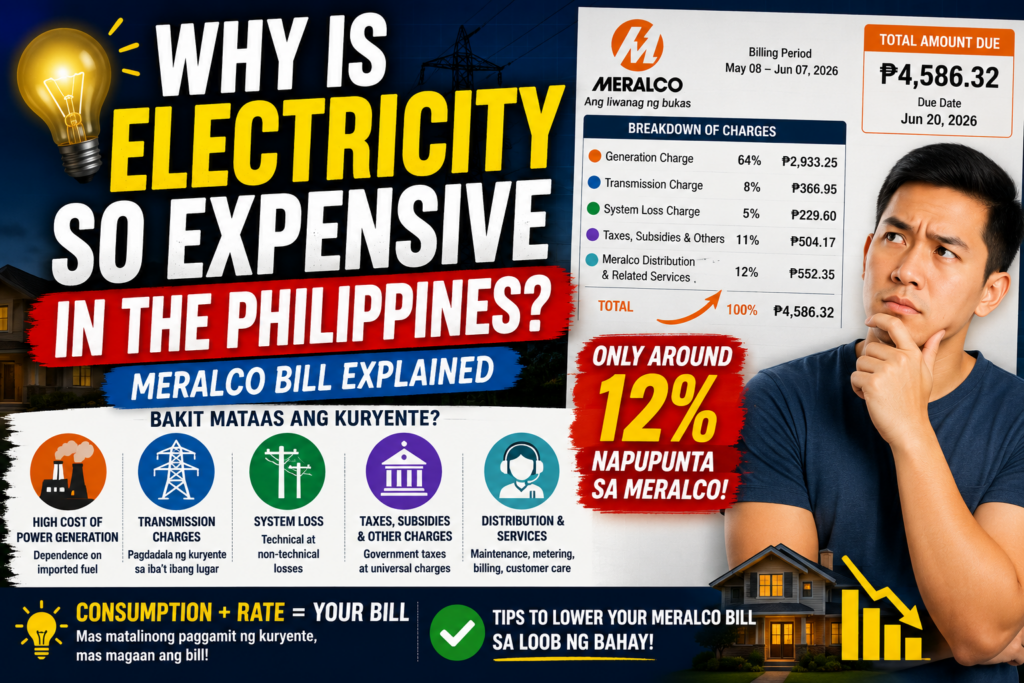
Based on Meralco’s published breakdown using the 2025 average bill composition, approximately:
64% — Generation Charge
8% — Transmission Charge
5% — System Loss Charge
11% — Taxes, subsidies and other charges
12% — Meralco distribution and related services
Ibig sabihin, according to Meralco:
Around 88% of the bill consists of pass-through charges.
Kinokolekta ito ng Meralco pero ipinapasa sa power generators, NGCP, government agencies at iba pang entities.
Around 12% ang napupunta sa Meralco for electricity distribution, network maintenance, metering, billing and customer service.
1. Generation Charge — Pinakamalaking Parte ng Bill
Ito ang biggest component ng electricity bill.
Approximately 64% ng average bill composition used by Meralco comes from generation.
Ito ang presyo ng electricity na binibili mula sa power suppliers.
Sources can include:
Power plants under supply agreements
Independent Power Producers
at
Wholesale Electricity Spot Market or WESM
Kaya kapag tumaas ang cost ng electricity generation, malaki agad ang epekto sa total bill.
2. Imported Fuel Can Affect Electricity Prices
Isa sa structural challenges ng Philippine power sector ang exposure sa imported energy.
Power generation can be affected by international prices of fuels such as:
Coal
Natural gas
at oil-related fuels.
Kapag tumaas ang global fuel prices, puwedeng tumaas ang generation cost.
At dahil international energy commodities are commonly priced in US dollars, mahalaga rin ang:
Peso-Dollar exchange rate.
Kapag humina ang peso, maaaring maging mas mahal in peso terms ang imported fuel at dollar-linked generation costs.
Ito ang dahilan kung bakit kahit hindi nagbago ang paggamit mo ng appliances, posible pa ring tumaas ang bill kapag tumaas ang electricity rate.
3. Transmission Charge
Hindi sapat na gumawa lamang ng electricity ang power plant.
Kailangan itong dalhin mula sa generating plants papunta sa distribution system.
Dito pumapasok ang:
Transmission Charge
which accounts for around 8% of Meralco’s cited average bill composition.
This covers the cost of using the transmission network as well as ancillary services needed to maintain grid reliability and stability.
The charge is remitted to the National Grid Corporation of the Philippines (NGCP).
4. Distribution Charge
Pagkatapos makarating ang electricity sa distribution network, kailangan itong ihatid sa:
bahay,
condominium,
stores,
offices,
at ibang consumers.
Ito ang pangunahing trabaho ng Meralco sa franchise area nito.
Meralco says approximately 12% of its cited average residential bill goes toward its distribution-related operations.
Kasama rito ang:
Distribution network
Maintenance
Metering
Billing
Customer service
at reliable delivery of electricity.
Meralco also states that its distribution charge is regulated by the Energy Regulatory Commission (ERC) and has not increased since 2015.
5. System Loss Charge
May electricity na nawawala habang dumadaan sa electrical system.
Ito ang tinatawag na:
System Loss
Meralco’s published average breakdown places this at approximately 5%.
May dalawang pangunahing dahilan.
Technical Loss
Natural energy loss habang dumadaan ang electricity sa:
Power lines
Transformers
at ibang electrical equipment.
Non-Technical Loss
Kasama rito ang issues tulad ng:
Electricity theft
at
Illegal connections.
Importante ring malaman na may system-loss cap na itinakda ang ERC. Losses above the allowable limit cannot simply be passed on to consumers.
6. Taxes, Subsidies and Other Charges
May iba pang charges sa electricity bill na hindi rin direct revenue ng Meralco.
Kasama rito ang iba’t ibang:
Government taxes
Universal Charges
Lifeline Subsidy
Senior Citizen Subsidy
Feed-in Tariff Allowance or FiT-All
at iba pang applicable charges.
Mayroon ding bagong component beginning in 2026:
Green Energy Auction Allowance — GEA-All
Starting January 2026, customers are charged an ERC-approved:
₱0.0371 per kWh
for GEA-All.
Ginagamit ito para suportahan ang renewable energy projects under the Green Energy Auction Program, including:
Solar
Wind
at
Hydro projects.
For a household consuming 200 kWh, the ₱0.0371/kWh rate represents approximately:
₱7.42
for that component.
The rate may change subject to ERC approval.
Bakit Nagbabago ang Meralco Rate Bawat Buwan?
Ito ang dahilan kung bakit hindi pareho ang electricity rate every month.
The largest component — generation charge — can change depending on:
Global fuel prices
Power supply and demand
Power plant availability
WESM prices
at
Foreign exchange movements.
Transmission charges can also move.
Kaya may dalawang bagay na nakakaapekto sa final bill:
1. Electricity rate
at
2. Electricity consumption
Kahit pareho ang consumption mo, puwedeng magbago ang bill kapag nagbago ang rate.
At kahit bumaba ang rate, puwedeng tumaas pa rin ang bill kung malaki naman ang itinaas ng consumption.
Bakit Sobrang Taas ng Bill Kapag Summer?
Dito maraming household ang nagugulat.
During hot months, mas matagal ginagamit ang:
Air conditioner
Electric fan
Refrigerator
at iba pang cooling appliances.
Ang aircon compressor ay maaari ring magtrabaho nang mas matagal kapag mataas ang outdoor temperature.
Halimbawa, kung dati 4 hours per day lang ginagamit ang aircon at naging 8–10 hours dahil sa init, malaking difference iyon sa monthly kWh consumption.
Kaya minsan hindi lamang electricity rate ang problema.
Consumption ang malaking dahilan.
Sample: Bakit Malaking Difference ang ₱1/kWh?
Halimbawa ang household ay gumagamit ng:
300 kWh per month.
Kung tumaas ang effective electricity rate ng:
₱1 per kWh
approximately:
300 kWh × ₱1 = ₱300
ang additional cost.
Kung 500 kWh ang consumption:
500 × ₱1 = ₱500
additional.
Kaya kahit mukhang maliit ang per-kWh increase, malaki ang epekto sa households na mataas ang electricity consumption.
“Meralco Ba ang Dahilan Kung Bakit Mahal?”
Hindi ganoon kasimple.
Meralco ang nakikita ng consumer dahil Meralco ang nagpapadala ng bill at kumokolekta ng payment sa service area nito.
Pero malaking bahagi ng bill ay hindi Meralco revenue.
According to Meralco’s published average breakdown:
88% = pass-through charges
at approximately
12% = Meralco distribution-related portion.
Kaya kapag pinag-uusapan kung bakit mahal ang electricity sa Pilipinas, kailangan tingnan ang buong power system:
Generation costs
Fuel prices
Power supply
Transmission
System losses
Taxes and government-mandated charges
Foreign exchange
at distribution.
Ano ang Puwedeng Gawin Para Bumaba ang Bill?
Hindi natin kontrolado ang global fuel prices o electricity rates.
Pero kontrolado natin ang consumption.
Start with the appliances that use the most electricity.
Usually, malaking contributor ang:
Air conditioner
Refrigerator
Water heater
Electric stove
Clothes dryer
at iba pang high-wattage appliances.
For aircon users:
Set a reasonable temperature, keep filters clean, close doors and windows properly, and avoid unnecessarily cooling empty rooms.
Kung bibili ng bagong appliance, tingnan hindi lamang ang purchase price kundi pati:
Energy efficiency.
Ang murang appliance na mataas ang electricity consumption ay maaaring maging mas mahal in the long run.
Frequently Asked Questions
Bakit mahal ang Meralco bill?
Dahil ang bill ay hindi lamang distribution charge. Kasama rito ang generation, transmission, system loss, taxes, subsidies at iba pang regulated charges. Generation is typically the largest component.
Lahat ba ng payment ay napupunta sa Meralco?
No.
Based on Meralco’s published 2025 average bill breakdown, approximately 12% goes toward Meralco’s distribution-related services, while around 88% consists of pass-through charges.
Ano ang pinakamalaking charge?
Generation Charge, representing approximately 64% in Meralco’s cited average bill composition.
Bakit nagbabago ang electricity rate monthly?
Generation costs can change because of fuel prices, supply and demand, power-plant availability, WESM conditions and foreign exchange rates. Transmission charges can also vary.
Ano ang system loss?
Ito ang electricity lost habang dumadaan sa electrical network because of technical factors and non-technical causes such as illegal connections. The amount that can be passed on to consumers is regulated and capped.
Bakit mas mataas ang bill during summer?
Usually dahil tumataas ang electricity consumption, particularly from air conditioners, fans and refrigerators working longer or harder during hotter weather.
Final Takeaway
Mahal ang electricity sa Pilipinas dahil maraming components ang bumubuo sa final electricity price.
Hindi sapat na tingnan lamang ang Meralco distribution charge.
The biggest component is usually the cost of generating electricity, followed by transmission, taxes and other charges, system loss and distribution.
At dahil exposed ang power sector sa factors tulad ng fuel prices, power supply conditions at foreign exchange movements, puwedeng magbago ang electricity rate from month to month.
Para sa ordinaryong household, dalawang bagay ang pinakamahalagang bantayan:
Magkano ang current rate per kWh?
at
Ilang kWh ang ginagamit ng bahay bawat buwan?
Dahil kahit hindi natin kontrolado ang electricity rate, malaking bahagi ng monthly bill ay maaari pa ring ma-manage sa pamamagitan ng mas efficient na paggamit ng kuryente.
Sa susunod na pagtingin mo sa Meralco bill, huwag lamang tingnan ang Total Amount Due.
Tingnan din ang kWh consumption at breakdown of charges.
Doon mo mas maiintindihan kung bakit tumaas o bumaba ang bill mo.
Disclaimer: Electricity rates and individual bill components can change from month to month. This article is for general informational purposes. Always check your latest Meralco bill and official Meralco/ERC information for current rates and charges.
Sources
Meralco – Breakdown of Charges
Official Meralco explanation of the major components of an electricity bill, including generation, transmission, system loss, taxes, subsidies and distribution-related charges.
Meralco – Bill Breakdown FAQs
Official explanations of electricity bill components, pass-through charges and factors that affect the amount customers pay.
Meralco – Green Energy Auction Allowance (GEA-All) FAQs
Official information on the ERC-approved GEA-All charge of ₱0.0371/kWh introduced in January 2026 and how it appears on Meralco bills.
CPBRD – Continuing Reform in the Power Sector: Addressing Energy Insecurity and High Prices
Policy research discussing imported-fuel dependence, taxes and subsidies, transmission constraints, market structure and other factors associated with high electricity prices in the Philippines.
Information checked: September 4, 2026
Note: Electricity rates and individual bill components can change from month to month due to generation costs, regulatory adjustments, taxes, government-mandated charges and other factors. The figures discussed in this article are for explanation and should not be treated as a fixed monthly Meralco rate. Check your latest Meralco bill and current official rate information for the amount applicable to your account.
PINOY GUIDE





Comments 0
Be the first to comment..