
Why Are Vegetable Prices Rising in the Philippines? How Heavy Rains Affect Food Prices
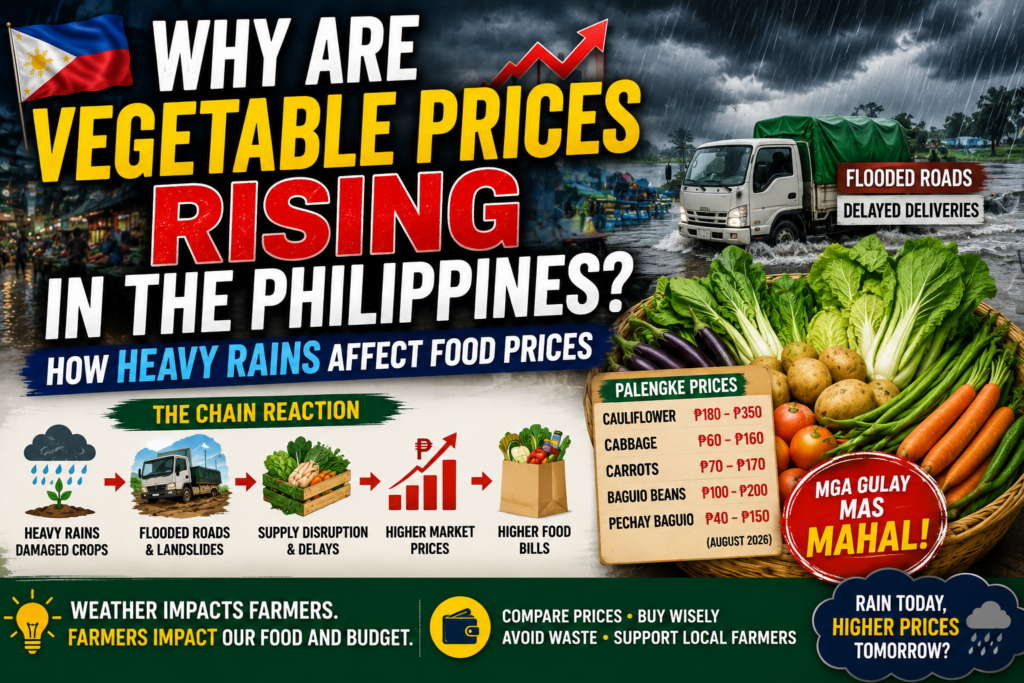
Kapag sunod-sunod ang malakas na ulan sa Pilipinas, hindi lang baha at traffic ang problema. After several days, maaari ring magbago ang supply at presyo ng gulay sa palengke at supermarket.
Hindi ito simpleng usapin ng “nasira ang mga pananim.” Heavy rain can affect harvesting, farm roads, transportation, spoilage and the amount of good-quality produce that finally reaches consumers. This guide explains that supply chain in practical terms.
How Heavy Rain Affects Vegetable Prices
The price you see at the market is affected by several steps between the farm and your table:
Farm → Trading Center → Truck → Wholesale Market → Palengke or Supermarket → Consumer
When one or more parts of this chain are disrupted, the effect can be different in each location. A farming area may have excess produce and low buying prices, while a city market experiences fewer deliveries and higher retail prices.
1. Crops Can Be Damaged
Vegetables need water, but prolonged rain can leave soil waterlogged and increase the risk of root damage, rot, fungal disease and lower crop quality. Leafy and highly perishable vegetables are especially vulnerable. Some produce may become unmarketable before it leaves the farm.
2. Harvesting Becomes More Difficult
Muddy fields and unsafe working conditions can delay harvesting. In mountainous production areas, trucks may also struggle to reach farms. Even healthy vegetables can remain in the field longer than planned, and every additional day matters for fresh produce.
3. Floods and Landslides Disrupt Deliveries
Vegetables from producing areas such as Benguet and Nueva Vizcaya often travel long distances before reaching Metro Manila and other consumer markets. Flooded roads, landslides and closures can delay trucks or force them to use longer routes.
This can produce a location mismatch: plenty of vegetables may be available at one trading center, while another market receives limited supply. The problem may be distribution rather than a nationwide shortage.
4. Fresh Produce Spoils Quickly
Pechay, lettuce, cabbage, tomatoes and cauliflower have limited shelf lives. A delayed shipment may arrive damaged or may not reach consumers at all. Farmers and traders lose saleable inventory, while buyers face fewer good-quality choices.
5. Transportation Costs May Rise
Trucks may need longer routes, more fuel and additional travel time during severe weather. Delays also increase spoilage risk. These costs do not always raise retail prices immediately, but they can add pressure when disruptions continue.
Why Can Farmers Lose Money While Retail Prices Rise?
Farmgate, trading-center and retail prices are not the same. When roads are blocked or buyers cannot collect produce, farmers may face oversupply, spoilage or very low buying prices. At the same time, consumers in another area may pay more because fewer deliveries arrive there.
This is why a high retail price does not automatically mean the farmer earns more. It may reflect losses and added costs elsewhere in the supply chain.
Are All Vegetable Prices Affected?
No. Prices vary according to the vegetable, location, season, product quality, local production, demand and road access. One item may become expensive while another remains affordable. Conditions can also differ between a farm area, a wholesale market and a neighborhood palengke.
For current figures, check the Department of Agriculture Price Monitoring page and compare them with prices in your local market. Government figures are useful references, but the amount a household actually pays may still vary.
What Can Consumers Do?
- Compare nearby markets. Check both the palengke and supermarket because prices and quality may differ.
- Choose vegetables that are abundant. Temporarily adjust meals when a particular item becomes unusually expensive.
- Buy only what you can use. A promotion is not a saving if half of the vegetables spoil at home.
- Consider practical substitutes. Use another vegetable with a similar cooking purpose when appropriate.
- Watch official price trends. A single store price does not show whether an increase is local or widespread.
Frequently Asked Questions
Does heavy rain always make vegetables more expensive?
No. Heavy rain can reduce supply in one consumer market while creating excess produce and lower prices in a farming or trading area. The result depends on crop damage, road access and where deliveries can go.
Does a price increase mean there is a nationwide shortage?
Not necessarily. A temporary increase can result from delayed deliveries, local demand or quality differences. Check official monitoring and several local sellers before drawing a conclusion.
When will prices return to normal?
There is no fixed timetable. Recovery depends on weather, replanting, harvest volume, road conditions and normal delivery routes. Prices can change daily and differently by location.
Final Takeaway
Heavy rain can affect vegetable prices long before produce reaches the market. Crop damage, delayed harvesting, blocked roads, spoilage and higher transport costs can all reduce the amount of marketable supply available to consumers.
At the same time, farmers may have unsold produce while households elsewhere pay more. Understanding this difference helps consumers avoid assuming that every price increase is caused by a nationwide shortage. Compare prices, choose available alternatives and use current official data when planning the household food budget.
Disclaimer: Food and vegetable prices can change daily and vary by location, market, season and product quality. This article provides general information and does not represent a guaranteed price forecast.
Sources
Department of Agriculture – Price Monitoring
Official daily and weekly retail price references for agricultural commodities in the Philippines.
Department of Agriculture – Vegetable Losses Amid Weather Woes
Official information on how persistent rain can affect crop quality, trading and vegetable losses.
Philippine Statistics Authority – Inflation and Consumer Price Index
Official national statistics for checking broader food-price movements.
Information checked: September 14, 2026
PINOY GUIDE





Comments 0
Be the first to comment..