
Palengke vs Supermarket: Saan Mas Makakatipid?
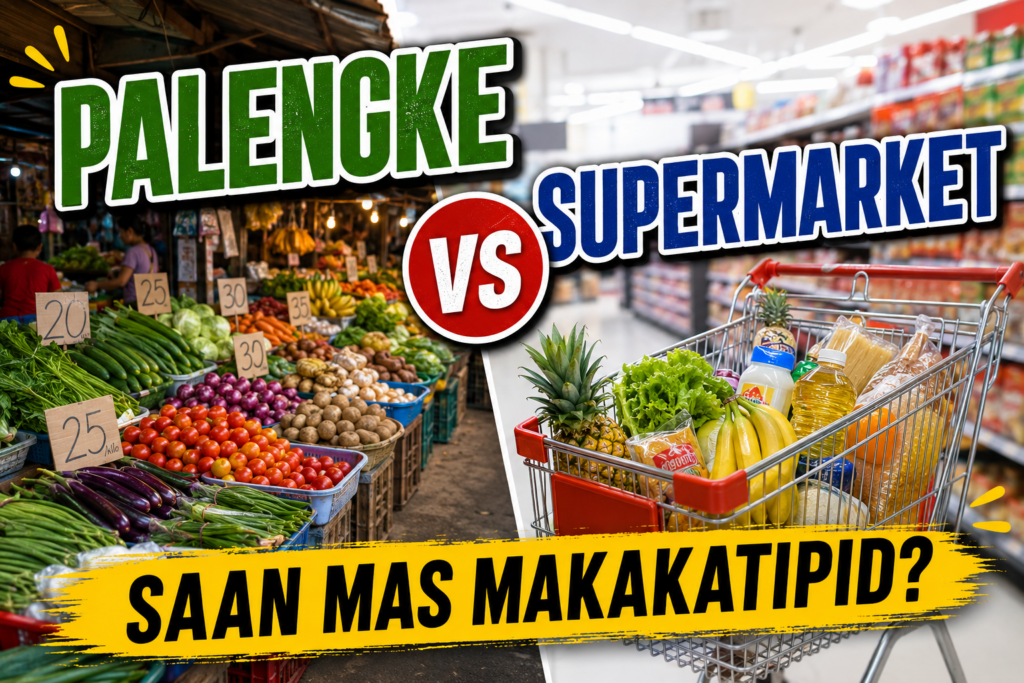
Mas mura ba sa palengke kaysa supermarket? Compare the same quality and quantity, then add transport and the amount your household can actually use. A lower price per kilogram is only part of the answer.
This guide is a shopping method, not a claim that one type of seller always charges less. Start with a short meal plan and check the sellers available in your area.
Compare Like with Like
| Product | Details that must match |
|---|---|
| Rice | Variety, grade, and price per kilogram |
| Fish | Species, size, whole or cleaned, and weight charged |
| Meat | Cut, bones included, fresh or frozen, and quantity |
| Vegetables and fruit | Variety, condition, ripeness, and usable quantity |
| Packaged goods | Brand, variant, net content, and expiry date |
Record the date and seller or branch. If a product is not an equivalent match, note the difference rather than declaring the lower price the winner. Ask whether cleaning or preparation changes the weight charged.
Check Usable Quantity, Not Just the Scale Reading
For products where trimming or cleaning removes part of what you buy, use this calculation: cost per usable kilogram = amount paid ÷ usable weight in kilograms. It helps compare different forms of the same ingredient, provided the quality is comparable.
Hypothetical example: one kilogram costs ₱150, but only 800 grams remain after preparation. Its usable cost is ₱150 ÷ 0.8 = ₱187.50 per kilogram. A comparable prepared 500-gram pack costing ₱100 is ₱200 per kilogram. These are illustrations, not current market prices or standard preparation yields.
Your preparation time and preferences still matter. Do not assume every seller or product has the same loss after cleaning.
Use Small Quantities When a Big Pack Creates Waste
Suppose you need 300 grams for a recipe but a prepacked option contains 500 grams. A flexible-quantity seller may help you avoid buying the extra 200 grams. A larger pack can also work if the remainder is included in another planned meal and you can store it appropriately.
Before buying, write down when each fresh ingredient will be used. Check the condition and suitability of the product; do not buy damaged or spoiled food simply because it is discounted.
When Is a Second Shopping Stop Worth It?
Add up the expected saving from the items assigned to the second stop. Subtract the extra round-trip fare or fuel, parking, and any other added charges.
| Hypothetical second stop | Amount |
|---|---|
| Saving on vegetables and fish | ₱120 |
| Extra transport | −₱80 |
| Saving left before valuing your time | ₱40 |
If the remaining saving is small, one nearby stop may be more practical. If both places are on a route you already take, the extra cost may be lower. Use the additional cost created by the shopping decision, rather than adding the same journey twice.
Build a Split List Before Leaving Home
Assign each item to the seller that offers the better equivalent price and a quantity you can use. Keep a backup option for unavailable products. Do not treat “fresh food at the market, packaged food at the supermarket” as a fixed pricing rule.
For example, compare vegetables and fish at a nearby market, then check the packaged goods on your list at a supermarket. If a supermarket promotion changes the result, update the list. If the market offers the better packaged-goods price, record that too.
Use our family grocery-list worksheet to work out quantities. For exact-brand supermarket comparisons, follow the 10-item basket method.
Use Price Reports as Context
The Department of Agriculture publishes price-monitoring reports. Check the report date, covered market, commodity specification, and unit before using a figure. A monitored price does not guarantee the price at every stall or supermarket.
Keep receipts or a written price record where receipts are unavailable. After a few trips, compare the same list again instead of relying on one unusually cheap or expensive day.
Reviewed October 24, 2026. The calculations and shopping method are PINOY GUIDE examples. No current branch or market price survey is claimed.






Comments 0
Be the first to comment..